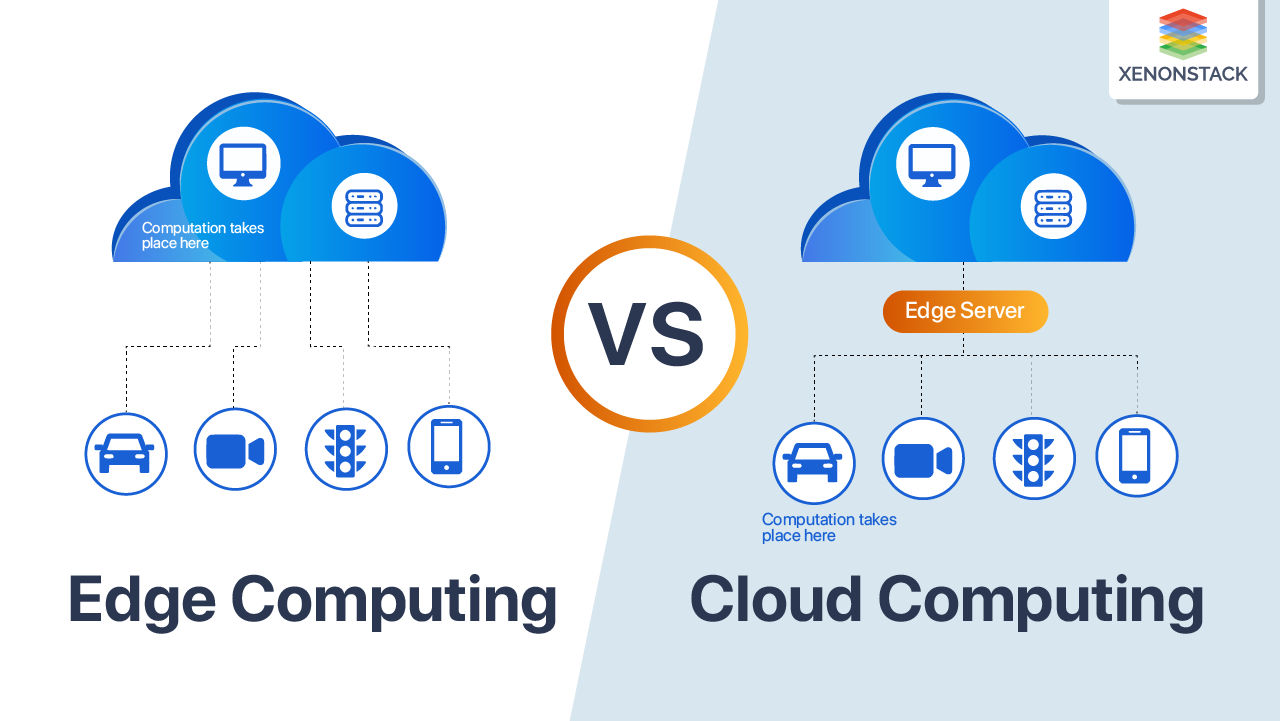
As technology continues to evolve, businesses and developers are exploring new ways to process and analyze data efficiently. Two significant paradigms in this context are edge computing and cloud computing. Both offer unique advantages and come with their own set of challenges. This blog post delves into the differences between edge computing and cloud computing, their respective advantages and challenges, and real-world use cases.
Understanding Edge Computing and Cloud Computing
Cloud Computing: Cloud computing involves delivering various services over the internet, including storage, processing power, and software. These services are hosted on remote servers, often in large data centers, and accessed via the internet. Cloud computing is known for its scalability, flexibility, and cost-effectiveness.
Edge Computing: Edge computing refers to processing data closer to the source of data generation, rather than relying on centralized data centers. This approach reduces latency and bandwidth usage by handling data locally or at nearby edge servers. Edge computing is especially beneficial for applications requiring real-time processing and low latency.
Advantages of Cloud Computing
- Scalability: Cloud computing offers virtually unlimited scalability, allowing businesses to easily adjust resources based on demand.
- Cost-Efficiency: With a pay-as-you-go model, businesses only pay for the resources they use, reducing infrastructure costs.
- Accessibility: Cloud services can be accessed from anywhere with an internet connection, facilitating remote work and collaboration.
- Disaster Recovery: Cloud providers offer robust backup and disaster recovery solutions, ensuring data safety.
- Maintenance: Cloud providers handle maintenance, updates, and security, freeing up internal IT resources.
Advantages of Edge Computing
- Reduced Latency: By processing data closer to its source, edge computing minimizes latency, which is crucial for real-time applications.
- Bandwidth Efficiency: Local data processing reduces the amount of data that needs to be transmitted to central data centers, saving bandwidth.
- Reliability: Edge computing can continue operating even when there is no internet connection, ensuring uninterrupted service.
- Security: Keeping sensitive data on local devices can enhance security by reducing exposure to potential cyberattacks on centralized servers.
- Scalability for IoT: Edge computing is ideal for the Internet of Things (IoT) applications, where numerous devices generate vast amounts of data.
Challenges of Cloud Computing
- Latency: Data transmission to and from centralized cloud servers can introduce latency, which is problematic for time-sensitive applications.
- Bandwidth Costs: Transmitting large volumes of data to the cloud can be costly, especially for bandwidth-intensive applications.
- Data Privacy: Storing sensitive data on remote servers raises privacy and security concerns.
- Internet Dependency: Cloud services rely on stable internet connections, which can be a limitation in areas with poor connectivity.
Challenges of Edge Computing
- Complexity: Managing a distributed network of edge devices can be complex and requires robust infrastructure and maintenance strategies.
- Scalability: Scaling edge computing infrastructure can be challenging compared to the flexible, on-demand nature of cloud computing.
- Limited Processing Power: Edge devices typically have less processing power compared to centralized cloud servers, limiting the complexity of tasks they can handle.
- Security: While local data processing can enhance security, it also introduces new security challenges in managing multiple edge devices.
Use Cases for Cloud Computing
- Data Analytics: Cloud computing is ideal for big data analytics, where large datasets are processed and analyzed to derive insights.
- Software as a Service (SaaS): Cloud platforms host applications that users can access via the internet, such as Google Workspace and Microsoft Office 365.
- Website Hosting: Websites and online services rely on cloud infrastructure for hosting, ensuring scalability and reliability.
- Backup and Disaster Recovery: Businesses use cloud services for data backup and disaster recovery, ensuring data safety and availability.
Use Cases for Edge Computing
- Autonomous Vehicles: Edge computing enables real-time data processing for autonomous vehicles, reducing latency and improving safety.
- Industrial IoT: In manufacturing, edge computing supports real-time monitoring and control of equipment, enhancing operational efficiency.
- Smart Cities: Edge computing powers smart city applications, such as traffic management and public safety, by processing data locally for quick decision-making.
- Healthcare: Edge computing facilitates real-time patient monitoring and data analysis in healthcare settings, improving patient care and outcomes.
Conclusion
Both edge computing and cloud computing play crucial roles in modern IT infrastructure, each offering unique advantages and addressing different challenges. Cloud computing excels in scalability, cost-efficiency, and accessibility, making it suitable for a wide range of applications. On the other hand, edge computing shines in scenarios requiring low latency, bandwidth efficiency, and real-time processing.
Choosing between edge computing and cloud computing depends on the specific needs of your application and the challenges you aim to address. In many cases, a hybrid approach that leverages the strengths of both paradigms can offer the best solution, ensuring optimal performance, efficiency, and scalability for your business.

0 Comments